Friday, September 25 0.46% between the rate on the news and the rate on your sheet Freddie Mac published 7.03% on Thursday morning, its first reading above 7% since January 2025. By Thursday afternoon, lenders were quoting 7.49%. The survey is taken Monday through Wednesday, so in a week when rates are climbing, the headline number falls furthest behind. Your rate sheet does not. Freddie Mac PMMS and Mortgage News Daily, September 24, 2026. National averages for illustration only, not a commitment to lend. Your rate depends on credit, loan amount, property and full underwriting. |
|
Average rates this week National averages, September 24, 2026 | Program | Rate | APR | | 30-Year Conforming | 7.49% | 7.60% APR | | 15-Year Fixed | 7.12% | 7.23% APR | | FHA 30-Year | 7.17% | 8.07% APR | | VA 30-Year | 7.19% | 7.44% APR | | Jumbo 30-Year | 7.55% | 7.66% APR |
HELOC, home equity loan and DSCR pricing is quoted per scenario, not as a national average, so there is no honest number to print here. Text me and I will quote yours. Conforming covers loans backed by Fannie Mae and Freddie Mac, which are not quoted separately. Sources: Mortgage News Daily daily averages and the Freddie Mac survey. APR estimates use industry-standard fee uplifts. National averages for illustration only, not a commitment to lend; your rate depends on credit, loan amount, property and full underwriting. |
|
From Debbie The question I got more than any other this week: the Fed raised rates, so is that why my mortgage rate is so high? Honestly, not really. The Fed sets a short-term, overnight rate. Your 30-year mortgage follows the 10-year Treasury. Look at what happened this month. The Fed raised rates on September 16, and the 10-year closed at 5.01%. The very next day it went down, to 4.94%. Then this week, with no Fed meeting at all, it climbed to 5.18% on Thursday, its highest level since 2007. If the Fed were driving your mortgage rate, those days would have gone the other way. So what is pushing it? It is happening around the world too, in Japan, the UK and Europe. Governments everywhere are borrowing a lot, so there are more bonds to sell. Oil prices have people worried about inflation again. And investors want to be paid more to lend money for a long time. If you are thinking about pulling cash out of your home, one thing did change with the Fed: most home equity lines of credit move with the prime rate, and prime went up the day after the hike. A fixed-rate second is worth comparing side by side right now. Ask me and I will run both for you. — Debbie |
|
Worth knowing Loan limits are moving up early This year’s official conforming loan limit is $832,750. The new limit for next year is usually announced around Thanksgiving, but some lenders are already lending above this year’s number on conforming first mortgages. High-balance and government loan limits have not moved yet. If you are shopping near that line, this can be the difference between a conforming loan and a jumbo. Send me the price you are looking at and I will tell you where it lands. |
|
New on the site The reverse mortgage page is live 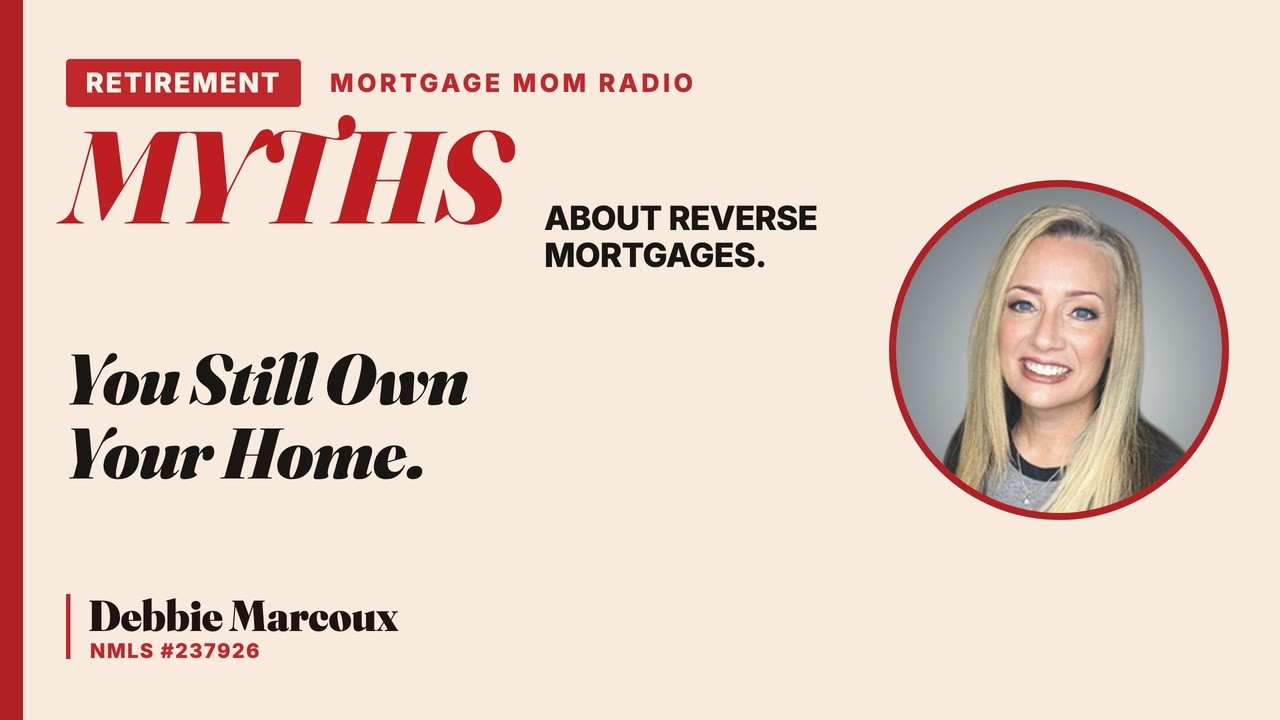 Reverse Mortgage Myths: No, You Don’t Sign Your Home Over to the Bank The biggest thing I hear about reverse mortgages is that you give your home to the bank. You don’t. You keep the title, you own your home, and you can sell it. Property taxes, insurance and upkeep stay yours. In this short video I walk through the most common myths and who a reverse mortgage can be a good fit for. For the federally insured HECM, the youngest borrower or spouse must be at least 62, and independent counseling is one of the first steps. If you are considering one, bring your kids or heirs to the call so everyone hears the same information. |
|
This week’s buyer $800,000 price · 10% down · 680 score $6,088 FHA 7.125% / 8.025% APR · $80,000 down | Principal & interest | $4,936 | | FHA mortgage insurance | $305 | | Property taxes | $667 | | Homeowners insurance | $180 |
MIP ends after 11 years at 10% down | $6,211 Conventional 10% 7.50% / 7.61% APR · $80,000 down | Principal & interest | $5,034 | | PMI | $330 | | Property taxes | $667 | | Homeowners insurance | $180 |
PMI drops off at 78% LTV |
Now add a 2/1 buydown Your rate is two points lower the first year and one point lower the second, then it settles at the full rate. The seller pays for it through a credit written into the contract. You still qualify at the full rate. | Monthly payment | FHA | Conventional | | Year 1 | $5,141
5.125% | $5,265
5.50% | | Year 2 | $5,603
6.125% | $5,728
6.50% | | Years 3–30 | $6,088
7.125% | $6,211
7.50% | | Seller credit needed | $17,173 | $17,157 |
That credit is about 2.1% of the price, well inside the 6% a seller can contribute on either loan. On either one it saves you about $950 a month the first year and about $485 the second, and it has to be negotiated into the offer, so bring it up before you write one. One catch on FHA: a $720,000 loan only works where the county limit allows it. This year’s FHA limits run from $541,287 to $1,249,125 depending on the county, so ask me about yours. Example rates of 7.125% FHA and 7.5% conventional were set by Debbie Marcoux for this illustration; they are not the national averages shown above. APR estimates use industry-standard fee uplifts. Property taxes are estimated at 1% of the purchase price a year and homeowners insurance at $180 a month; both vary widely by state, county, property and coverage. FHA mortgage insurance is the 1.75% upfront premium, financed into the loan, plus 0.50% a year, per HUD. PMI is estimated at 0.55% a year and depends on credit and coverage. HOA dues not included. Buydown figures follow JMJ Financial’s temporary buydown method. For illustration only. Not a commitment to lend. Actual rates, payments, eligibility and seller-credit limits depend on full underwriting. |
|
On the show this week  Short Sales Are Back: The Truth for Buyers Hunting a Deal and Sellers Who Are Struggling Short sales are coming back for the first time since the Great Recession. If you are struggling with your payment, a short sale may be a better path than foreclosure, and the time to act is before you miss your first payment. If you are a buyer hoping for a deal, there is a lot to know before you make an offer. Debbie covers when to call your lender, how sellers qualify and why the hardship letter matters, what happens with the leftover balance, taxes and your credit, and whether a short sale is really a better deal. |
|
 | Talk to me Debbie Marcoux Mortgage Mom · NMLS #237926 · on air Wednesdays 3PM PT |
If something in here raised a question, ask me. You do not have to be ready to buy, you do not need paperwork, and there is no application involved. Most of what I do all day is answer questions for people who are still figuring it out. Pick a time that works for you and we will talk it through. Where I can help. Licensed in Arizona, California, Colorado, Florida, Georgia, Hawaii, Idaho, Illinois, Nevada, North Carolina, Oregon, Tennessee, Texas and Washington. If you are buying somewhere else, tell me anyway and I will say so straight away. |
|
Send me your scenario. I will run your actual numbers for your actual situation. No pressure, no application. |
|
Debbie Marcoux, NMLS #237926 · JMJ Financial dba Mortgage Mom Radio, NMLS #167867 · Equal Housing Lender. Licensed in AZ, CA, CO, FL, GA, HI, ID, IL, NV, NC, OR, TN, TX, WA. Debbie Marcoux is a licensed mortgage loan originator. She is not a financial advisor, investment adviser, tax professional or attorney, and nothing in this newsletter is financial, investment, tax or legal advice. Consult your own professional about your particular situation before acting. For illustrative and educational purposes only. Not a commitment to lend. Rates, terms and eligibility subject to underwriting approval and change without notice. |
|

